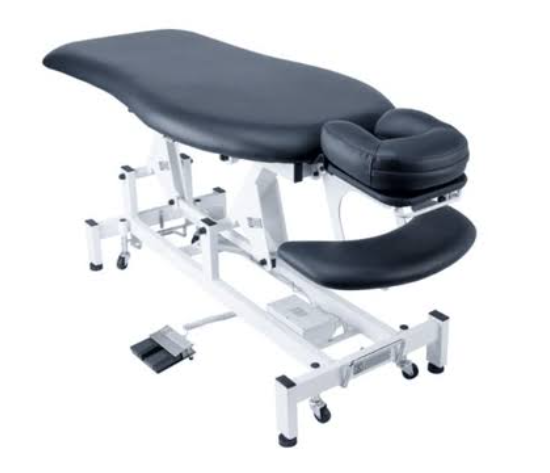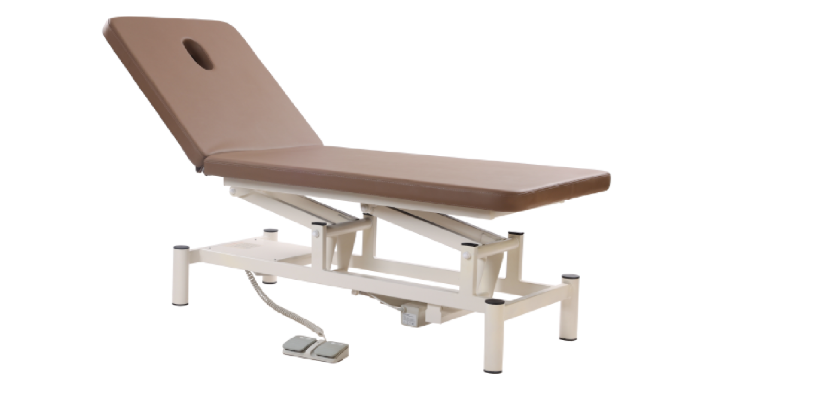
Most people setting up a new clinic start with the lease, the signboard, and the reception desk, and sort out the treatment area near the end. That order feels natural, but it may be a little backwards. The electric hi-lo treatment table is the piece of furniture your patients will spend the most time on, and your therapists work around it for hours every day. When it is picked last, the room often ends up planned around whatever fits the leftover budget.
So this post starts with the table instead. It covers what an electric hi-lo treatment table does, which features matter for a fresh setup, and how to match the table to the work your clinic plans to do. Nothing here is complicated, and you can probably work through it in one sitting.
What an Electric Hi-Lo Treatment Table Does Differently
A hi-lo table moves up and down with a motor. You press a switch, and the whole top rises or lowers to the height you need. A fixed couch stays at one height, so the therapist has to bend or stretch to suit each patient.
That difference sounds small on paper. Over a full day of sessions, it adds up. A tall therapist treating a short patient on a fixed couch spends the day bent forward, and a shorter colleague on the same couch faces the opposite problem.
Patients notice it too. An older person recovering from knee surgery may find a high couch hard to climb onto. When the table drops low, they can sit first and then swing their legs up with far less effort.
Why the Treatment Table Should Come First in Your Clinic Setup
Here is why the order matters. Once the table is chosen, most other decisions in the room follow from it.
- Room size: A 7-section table needs more floor space and turning room than a 2-section examination table.
- Power points: Electric tables need a socket nearby, so the wiring plan should account for it before the walls are finished.
- Stools and trolleys: Their height and placement depend on the table’s working height range.
- Budget split: Knowing the table cost early stops the treatment room from getting whatever money is left over.
Clinic owners who skip this step sometimes end up moving sockets or reworking cabinets after opening. It is a fixable problem, though it costs money nobody budgeted for.
Features to Check on an Electric Hi-Lo Treatment Table
These are the features worth checking before you place an order.
- Height control from both sides: A walk-free switch around the base lets the therapist raise or lower the table from either side.
- Foot switch: It keeps both hands free during manual therapy.
- Section count: Two sections suit general examinations. Three or four sections allow more positions, and a 7-section top gives physiotherapists and chiropractors the widest choice.
- Lockable backrest and headrest: Gas-spring-assisted locking holds a set position steady during treatment.
- Lowerable armrests: These make face-down positions more comfortable for the patient.
- Face cut-out: It helps when a patient lies prone for neck or back work.
- Swivel wheels: Four wheels let staff move the table for cleaning and then park it firmly in place.
- Frame and upholstery: Look for a powder-coated steel frame, high-density foam and fire-retardant, antimicrobial upholstery that wipes clean between patients.
Do you need every feature on day one? Probably not. It still helps to know which ones you are giving up, and why.
See Also: Haile-Selassie prolonge son aventure à Chicago jusqu’en 2029
Matching the Treatment Table to Your Clinic Type
A general physician’s clinic, a sports rehab centre and a neuro rehabilitation unit do very different work. One table rarely suits all three.
For general check-ups, a 2-section treatment cum examination table usually does the job. Esthetica’s Manan and Manan Eco models fall into this group.
Physiotherapy and chiropractic practices tend to need more positioning options. The Parth 4-section table and the Mahit 7-section table give therapists room to set up a wider mix of treatments. The Ojas flat-top design suits sports rehabilitation, where a broad, even surface matters more than sections.
Neurological rehabilitation is its own category. The Bobath table is a 2-section model built for this kind of therapy. The Nirav, with its short head section, allows precise work on the neck and shoulders.
If your clinic plans to offer a mix of services, it might make sense to start with one multi-section table and add a simpler examination table later. Some owners prefer the reverse, and both routes can work.
Getting Your First Clinic Treatment Room Right
A new clinic gives you one clean chance to plan the treatment room properly. Moving a socket after opening day is annoying. Replacing a table that never suited your therapists is worse, and it usually happens a year or so in, once the staff admit the couch is behind their sore backs.
Starting with the electric hi-lo treatment table keeps the rest of the plan grounded. Pick the table that fits the work you expect to do, then build the room around it.